

Every system you rely on
starts behind the wall.
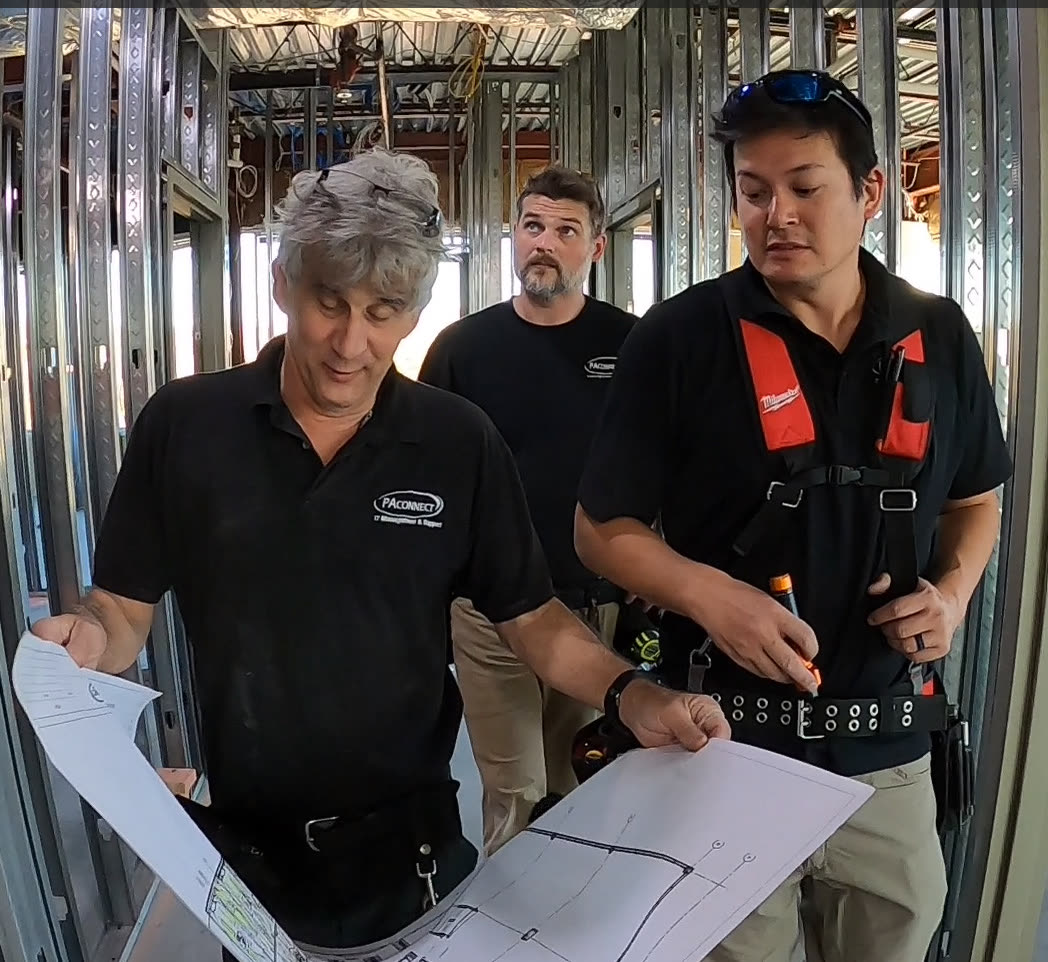
Your phones, cameras, door access and Wi-Fi all inherit the limits of the wiring beneath them. We design and install low voltage infrastructure — structured cabling, fiber and racks — as the foundation it is.
Infrastructure that won't limit you later
-
Copper & voice cabling
The cheapest pull is the one you do now
We plan data and voice runs around the desks, phones and equipment you'll add, then show you what the extra capacity costs while the walls are open — and what it costs in three years. The call is yours.
-
Fiber, in-house
One crew, start to finish
Backbone and building-to-building fiber installed and terminated by our own technicians, so nobody new turns up halfway through the job.
-
Racks & data rooms
A closet anyone can read
Racks, patch panels and cable management laid out so the next person through the door can follow it instead of tracing it.
-
Testing
Nothing goes live on trust
Every run is tested before the job is signed off — not a sample, and not the ones that look doubtful.
-
Labelling & documentation
Changes in minutes, not afternoons
Ports, panels and jacks labeled to match a written record of every run, so a move, add or fix starts from a map.
-
Cameras, door access & Wi-Fi
One trade instead of three
The cabling behind surveillance cameras, door readers and wireless access points goes in on the same job, planned as one system.
The wiring sets the ceiling for everything else
Cabling sits behind the drywall, works on day one, and is forgotten — until calls start dropping, a camera goes dark or the Wi-Fi can't reach the new wing. Then the fault looks like the phone vendor's or the camera installer's, and you pay to find it before you pay to fix it.
That is technical debt you can't see. You pay it again with every move, expansion and new system, and paying it off means opening walls. Built properly, it is the one layer of your technology you should only have to buy once.
A cabling contractor finishes the job and leaves. We warranty ours — and where we also run the network, phones and cameras on top of it, we're the ones who live with it. So that is how we build it.
- Phones & video calls
- Security cameras
- Door access
- Wi-Fi
- Network & servers
- Low voltage infrastructure Cabling · fiber · racks
What paying it off looks like
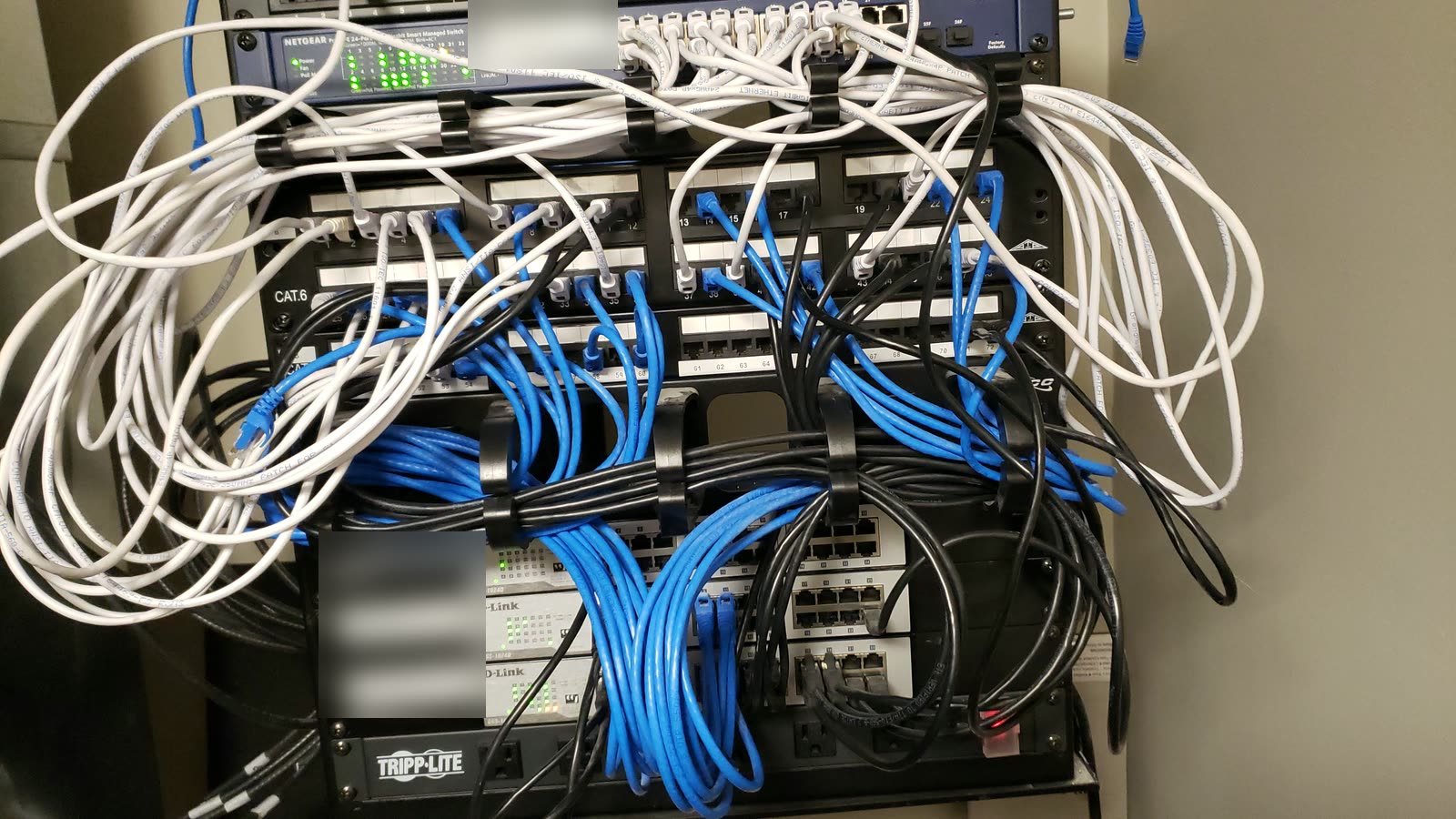
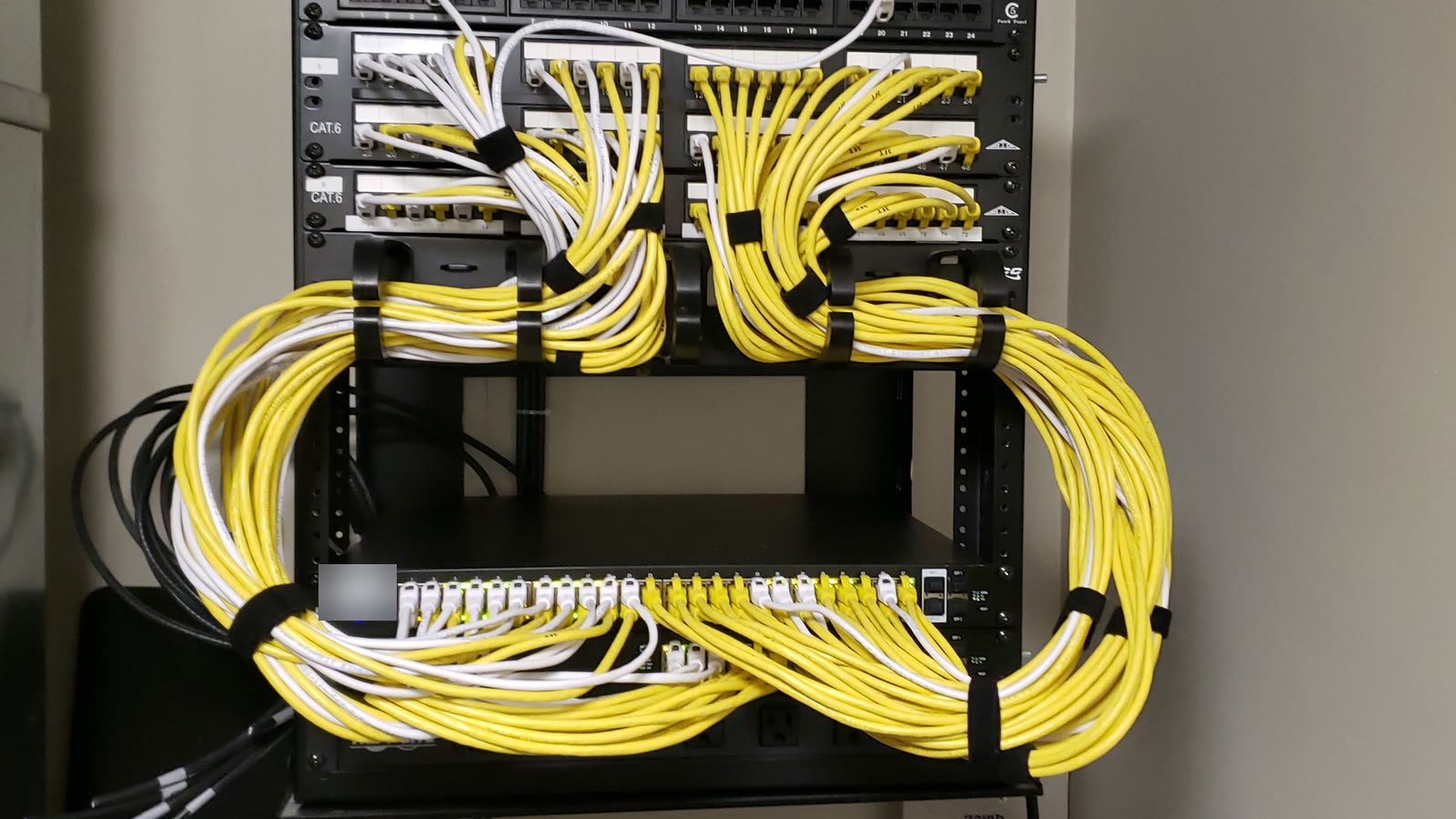
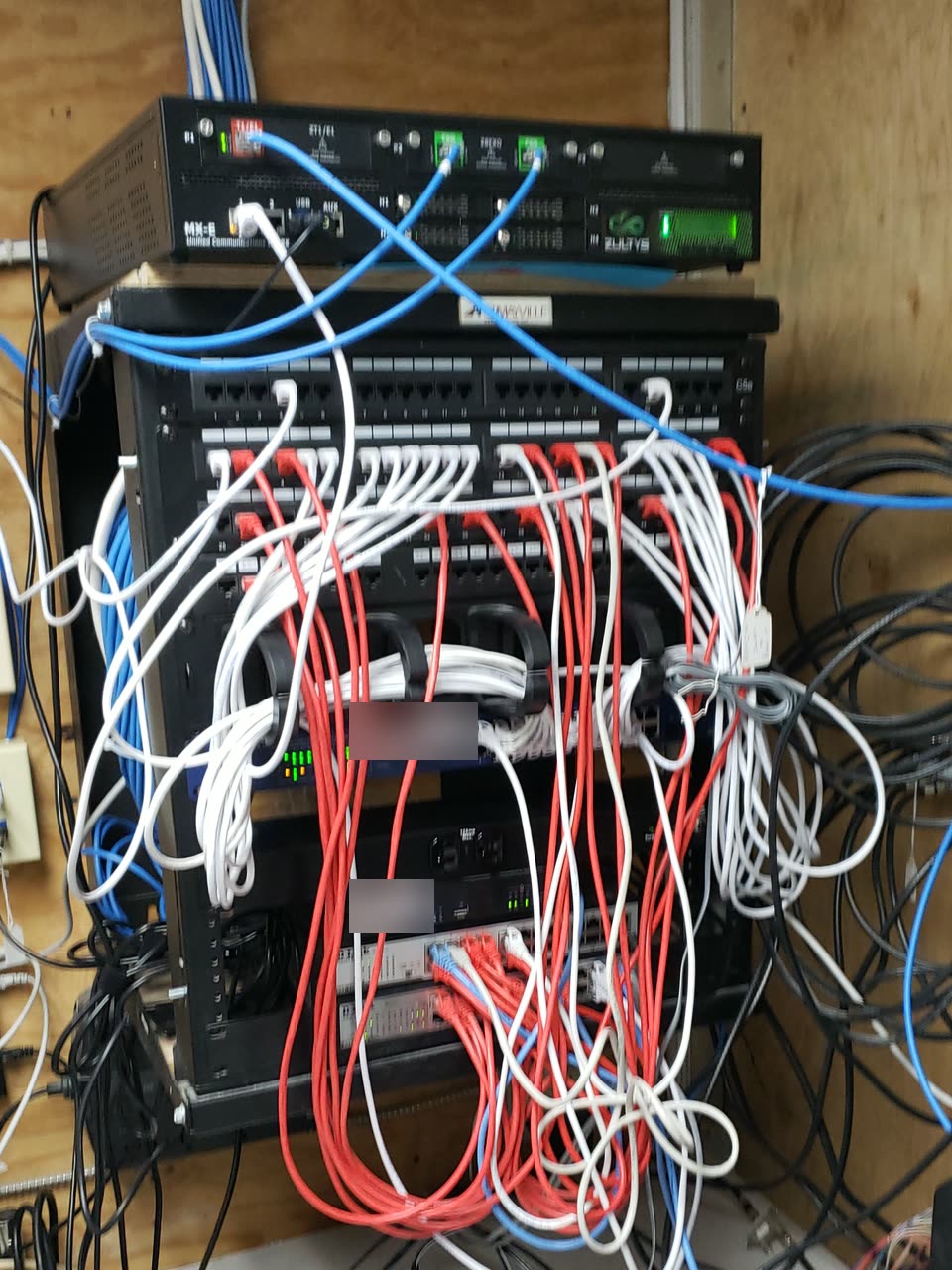
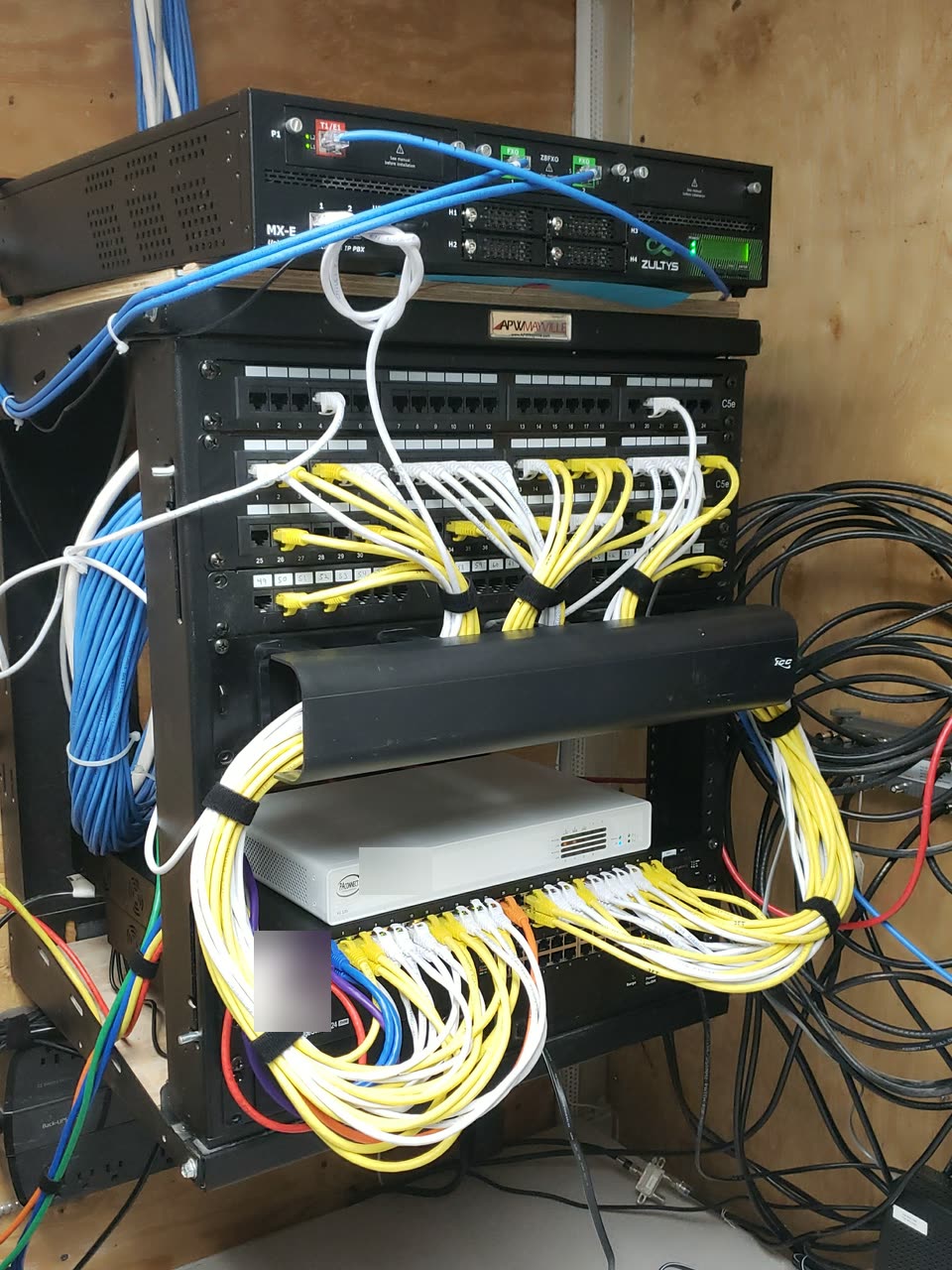
Two closets at one Westmoreland County client, photographed on the job. Drag across either photo to compare them, or tab to it and use the arrow keys.
Which of these has cost you time this year?
None of them looks like a wiring problem. Most of them are.
Tap any that sound familiar to see how we handle it.
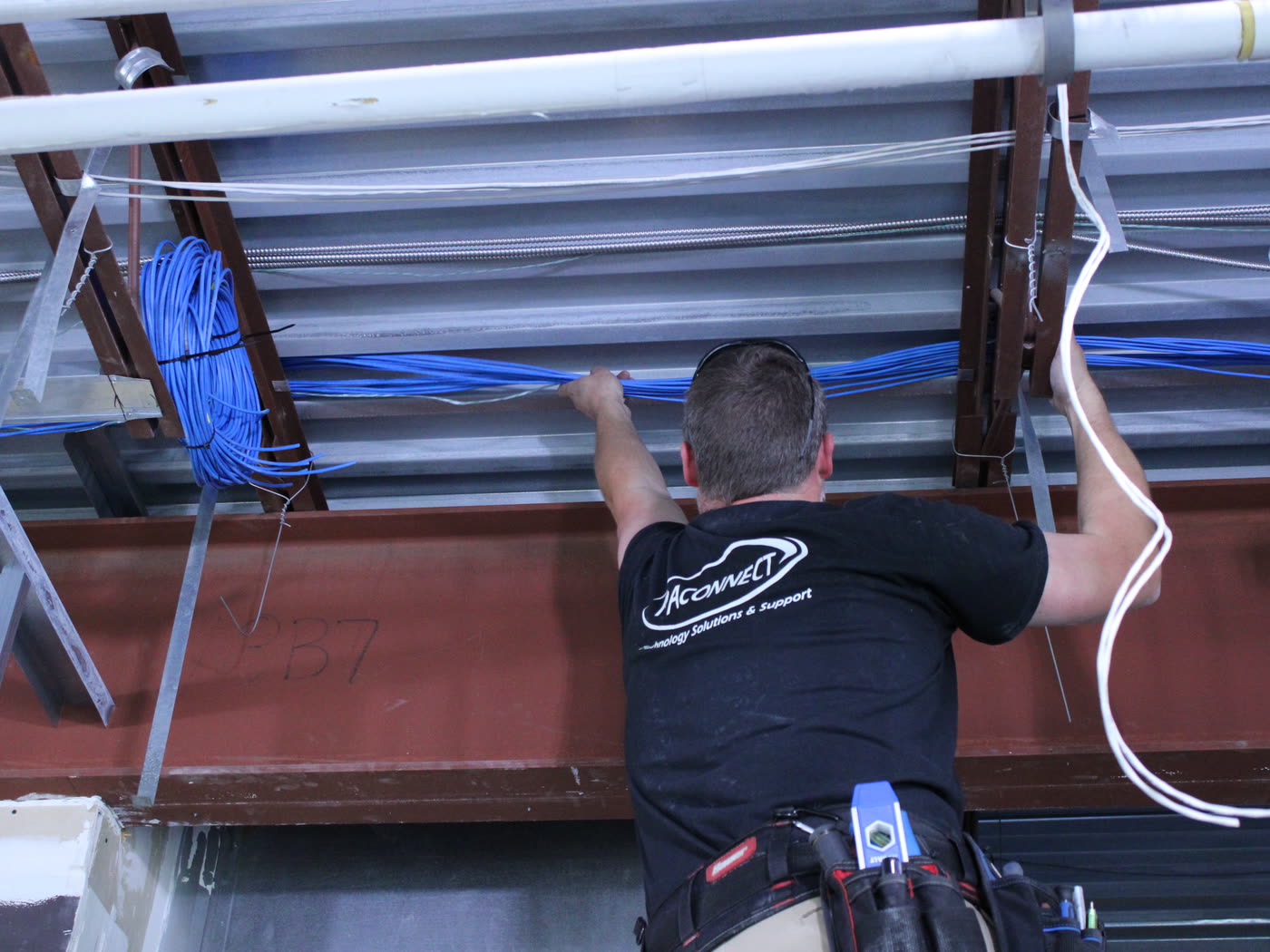
One low voltage sub for the whole scope
Commercial builders bring us in to take low voltage off their plate: data, voice, fiber and the cabling for cameras, door access and Wi-Fi, under one sub, and handed over with the paperwork your client expects.
-
The whole scope, one sub
Every low voltage system on one contract — and fiber done in-house, so there's no sub-of-a-sub.
-
In ahead of the walls
We work to your schedule and alongside your other trades, so the drywall isn't waiting on us.
-
The paperwork, met
Certificates of insurance, prevailing wage, bonding — we've met every requirement we've been asked for, and we'd rather settle that at bid time than at turnover.
-
Closeout, ready
Every run tested, labeled and written up, ready to hand to your client at turnover.
-
A local team for your client
After turnover, the owner has a team nearby that already knows the building, if they want one.
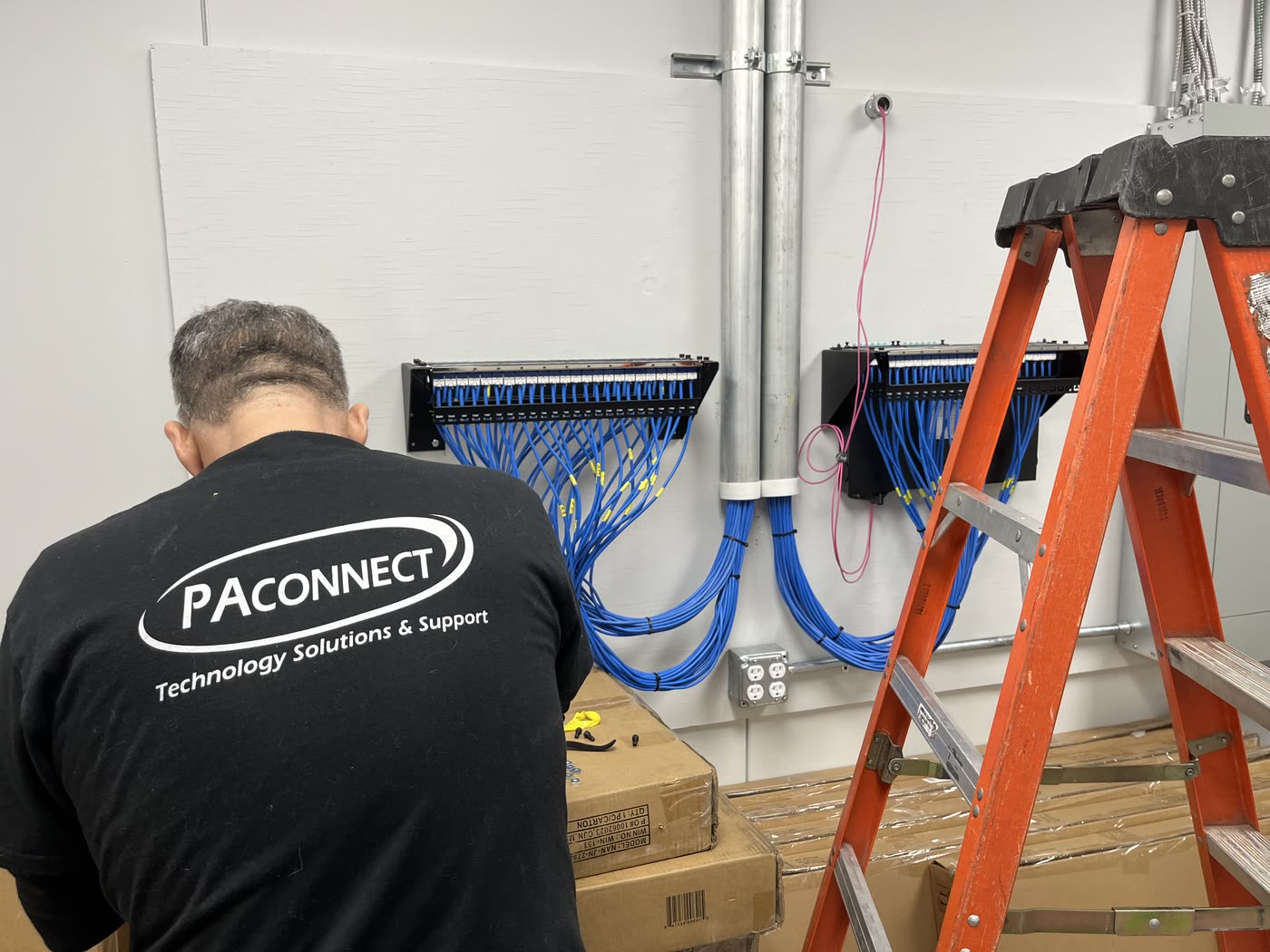
You leave with the paperwork, not just the ports
A tidy closet on day one is easy; knowing what is in it five years later is the part that saves money. Every run we install is tested and labeled, and the documentation is handed over at the end of the job — the closeout package for a builder, and for the owner, a map for every change that follows.
-
Test results for every run
Recorded before the job is signed off, so a problem later starts from a known-good baseline.
-
Labels that match the record
The name on the patch panel is the name on the wall jack is the name in the documentation.
-
The documentation, in your hands
Yours to keep and to give to anyone, not held back so that only we can read the closet.
What owners and builders ask first
What does low voltage wiring cover?
The wiring that carries data and signals rather than mains power: data and voice cabling, fiber, the runs behind security cameras, door access readers and wireless access points, and the racks and data rooms they all terminate in. Structured cabling is the planned, labeled and documented way of doing it.
Do you work as a low voltage subcontractor on commercial projects?
Yes, and most of that work is bid from the drawings alone. Send the project details and drawings through the form below, choosing the contractor option, and we'll come back with a bid.
Is every run really tested?
Every one, before the job is called finished — and every one labeled to match the written record of the install, which is yours to keep.
Do you install fiber yourselves?
Yes. Fiber backbones and links between buildings are installed and terminated by our own technicians, not handed to a subcontractor.
Can you get us between two buildings?
Yes, three ways: aerial, buried in conduit, or a wireless bridge where digging costs more than the link is worth. Which one makes sense usually comes down to the distance, what's between the two buildings and who owns the ground in between.
Is there a minimum job? We only need a few drops.
No minimum. Most of this page describes whole floors and new buildouts because that is where the planning matters most, but a handful of drops in an existing building is ordinary work. Distance is the only real limit — a site far outside our area may not be practical.
Can you fix a closet that's already a mess?
Yes — both racks in the before-and-after photos above were existing closets. Where the cabling itself is sound we re-dress, label and document it; where it isn't, we tell you what needs replacing and why before any work starts.

Start with the building
Tell us what you're planning — a move, an expansion, a new build or the closet you already have. Owners get a conversation about what the infrastructure needs to carry; contractors get a bid.
Why one team for the wiring, the network and the phones? Why PAconnect →
724-838-7526Thank you — we'll be in touch.
A member of our team will reach out within one business day to schedule your discovery session. If it's urgent, call 724-838-7526 and ask for the help desk.
A member of our team will be in touch within one business day about the project. If the bid date is close, call 724-838-7526.